Share Vine and Timberline Overpass Project on FacebookShare Vine and Timberline Overpass Project on X (formerly Twitter)Share Vine and Timberline Overpass Project on LinkedinEmail Vine and Timberline Overpass Project link
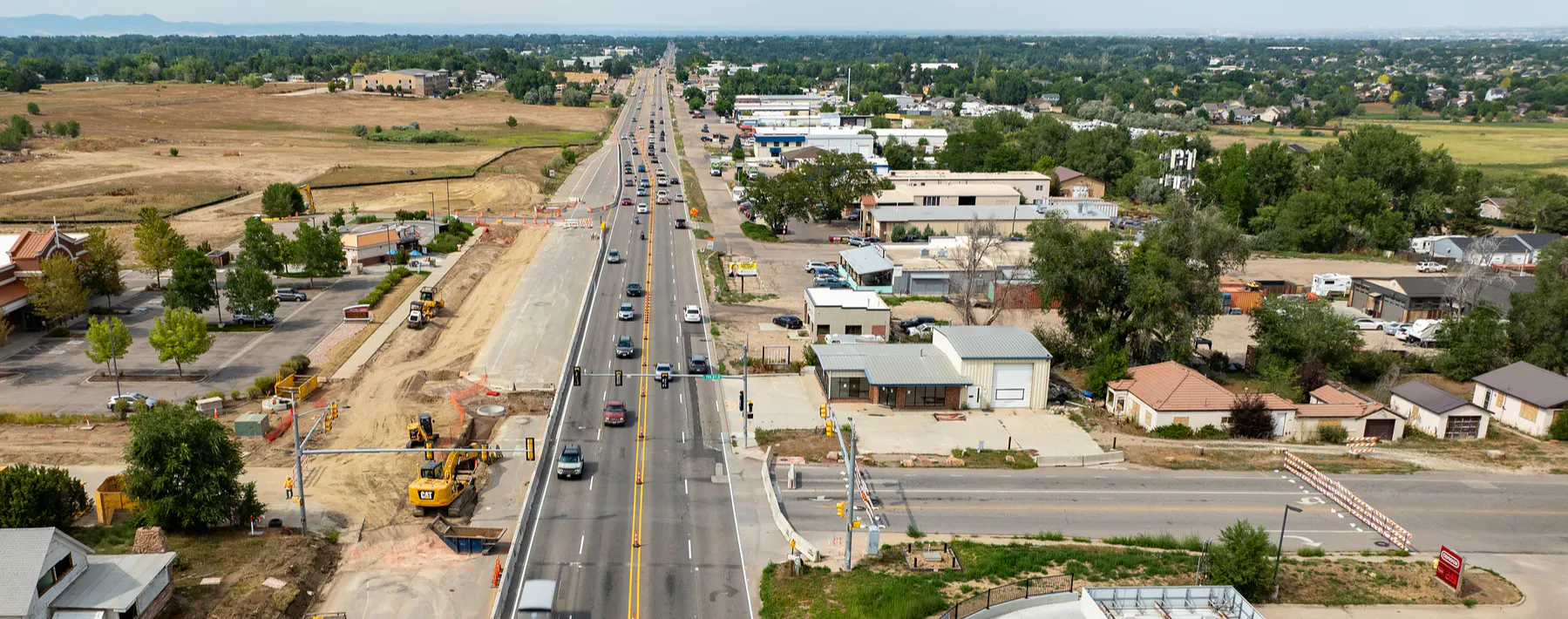
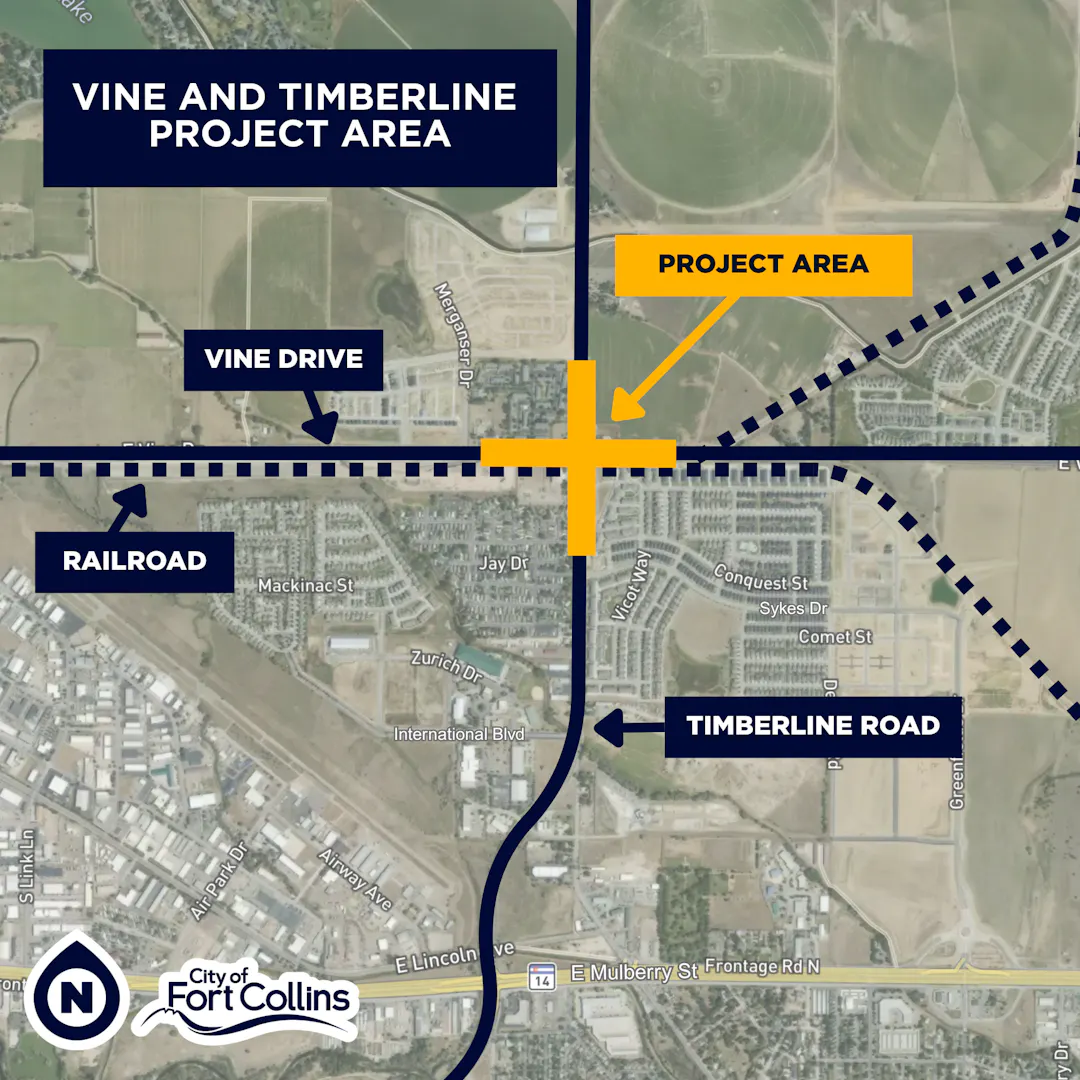
The City of Fort Collins wants to build an overpass where Timberline Road crosses the railroad tracks near Vine Drive. Right now, the road and the tracks meet at the same level, or “at grade.” An overpass would raise the road above the tracks so trains and traffic no longer cross paths.
The overpass will be a key part of the future street grid of Northeast Fort Collins. Along with future extensions of Suniga Road and Turnberry Road and a future expansion of Mountain Vista Drive, Timberline Road will be a primary thoroughfare between future development north of Vine and the rest of the city.
The City is working with the Federal Railroad Administration (FRA), Burlington Northern Santa Fe Railway (BNSF) and Great Western Railway (GWR) on this project.
This project would:
Make the crossing safer for drivers, cyclists and pedestrians
Improve traffic flow and travel times
Create safer routes for people to walk, bike or take transit
Carry out the goals the City has already set in its transportation plans
The City of Fort Collins wants to build an overpass where Timberline Road crosses the railroad tracks near Vine Drive. Right now, the road and the tracks meet at the same level, or “at grade.” An overpass would raise the road above the tracks so trains and traffic no longer cross paths.
The overpass will be a key part of the future street grid of Northeast Fort Collins. Along with future extensions of Suniga Road and Turnberry Road and a future expansion of Mountain Vista Drive, Timberline Road will be a primary thoroughfare between future development north of Vine and the rest of the city.
The City is working with the Federal Railroad Administration (FRA), Burlington Northern Santa Fe Railway (BNSF) and Great Western Railway (GWR) on this project.
This project would:
Make the crossing safer for drivers, cyclists and pedestrians
Improve traffic flow and travel times
Create safer routes for people to walk, bike or take transit
Carry out the goals the City has already set in its transportation plans
Share "Timberline and Vine" Informational Community Meeting on FacebookShare "Timberline and Vine" Informational Community Meeting on X (formerly Twitter)Share "Timberline and Vine" Informational Community Meeting on LinkedinEmail "Timberline and Vine" Informational Community Meeting link
Join us for a community meeting to learn more about two projects in the area and provide your perspective.
Timberline and Vine Overpass
Turnberry and Suniga Roadway Extension
Light refreshments will be served. Spanish interpretation will be provided from 5-6 p.m. Family-friendly event.
To learn more about the project, visit FortCollins.gov/Vine
When: Thursday, November 5, 4-6 p.m. – Drop in any time
Where: City of Fort Collins Street Operations Facility, 625 Ninth Street, Fort Collins, CO 80524
RSVP here. Providing an RSVP is optional, but it helps us know how many people to expect and if you have any accommodation requests.
Join us for a community meeting to learn more about two projects in the area and provide your perspective.
Timberline and Vine Overpass
Turnberry and Suniga Roadway Extension
Light refreshments will be served. Spanish interpretation will be provided from 5-6 p.m. Family-friendly event.
To learn more about the project, visit FortCollins.gov/Vine
When: Thursday, November 5, 4-6 p.m. – Drop in any time
Where: City of Fort Collins Street Operations Facility, 625 Ninth Street, Fort Collins, CO 80524
RSVP here. Providing an RSVP is optional, but it helps us know how many people to expect and if you have any accommodation requests.
Share Project Lifecycle on FacebookShare Project Lifecycle on X (formerly Twitter)Share Project Lifecycle on LinkedinEmail Project Lifecycle link
The project team will first study current conditions in the area, then develop design options for review. The community can give feedback during two engagement periods: Fall 2026 and Spring 2027. The project is currently in the “Project Planning” phase of the FRA Project Lifecycle.
Systems Planning:Identify transportation needs and priorities across states, regions and corridors, and determine which projects should move forward.
WE ARE HERE - Project Planning:Define the project’s purpose and need, develop early concepts, consider different options and engage stakeholders.
Project Development:Complete environmental reviews and preliminary engineering, develop cost and schedule estimates, plan project finances and management, develop a procurement strategy and secure stakeholder agreements.
Final Design: Complete the engineering and final cost and schedule, finalize procurement and project agreements, confirm management and financial plans, acquire needed right-of-way and complete any early work or relocations.
Construction: Build the project, acquire and install equipment and utilities, manage financing and construction, and test and commission the completed work.
Operation: Put the project into use, assess its benefits and performance, and review what we can learn from the project.
The project team will first study current conditions in the area, then develop design options for review. The community can give feedback during two engagement periods: Fall 2026 and Spring 2027. The project is currently in the “Project Planning” phase of the FRA Project Lifecycle.
Systems Planning:Identify transportation needs and priorities across states, regions and corridors, and determine which projects should move forward.
WE ARE HERE - Project Planning:Define the project’s purpose and need, develop early concepts, consider different options and engage stakeholders.
Project Development:Complete environmental reviews and preliminary engineering, develop cost and schedule estimates, plan project finances and management, develop a procurement strategy and secure stakeholder agreements.
Final Design: Complete the engineering and final cost and schedule, finalize procurement and project agreements, confirm management and financial plans, acquire needed right-of-way and complete any early work or relocations.
Construction: Build the project, acquire and install equipment and utilities, manage financing and construction, and test and commission the completed work.
Operation: Put the project into use, assess its benefits and performance, and review what we can learn from the project.
Share Goals of the Overpass Project on FacebookShare Goals of the Overpass Project on X (formerly Twitter)Share Goals of the Overpass Project on LinkedinEmail Goals of the Overpass Project link
This project helps support several community and City goals:
Improve Safety: Trains and roads currently cross right next to each other. This creates risk for drivers, cyclists and pedestrians. An overpass would remove that risk and help prevent future crashes, injuries and trespassing on railroad tracks.
Improve Traffic Flow and Reliability: Trains often block the road when they stop on the tracks. This project would keep traffic moving on Timberline Road and Vine Drive, reducing delays and making travel times more predictable. It would also help people reach jobs, schools and emergency services faster.
Support Walking, Biking and Transit: This project would add safe, dedicated space for people who walk or bike. It would also make bus service more reliable.
Accomplish the City’s Long-Term Plans: City Council has approved several transportation plans that call for changes at this location. For decades, the Master Street Plan has shown Timberline Road as a future four-lane street and this intersection as a likely site for an overpass.
This project helps support several community and City goals:
Improve Safety: Trains and roads currently cross right next to each other. This creates risk for drivers, cyclists and pedestrians. An overpass would remove that risk and help prevent future crashes, injuries and trespassing on railroad tracks.
Improve Traffic Flow and Reliability: Trains often block the road when they stop on the tracks. This project would keep traffic moving on Timberline Road and Vine Drive, reducing delays and making travel times more predictable. It would also help people reach jobs, schools and emergency services faster.
Support Walking, Biking and Transit: This project would add safe, dedicated space for people who walk or bike. It would also make bus service more reliable.
Accomplish the City’s Long-Term Plans: City Council has approved several transportation plans that call for changes at this location. For decades, the Master Street Plan has shown Timberline Road as a future four-lane street and this intersection as a likely site for an overpass.