
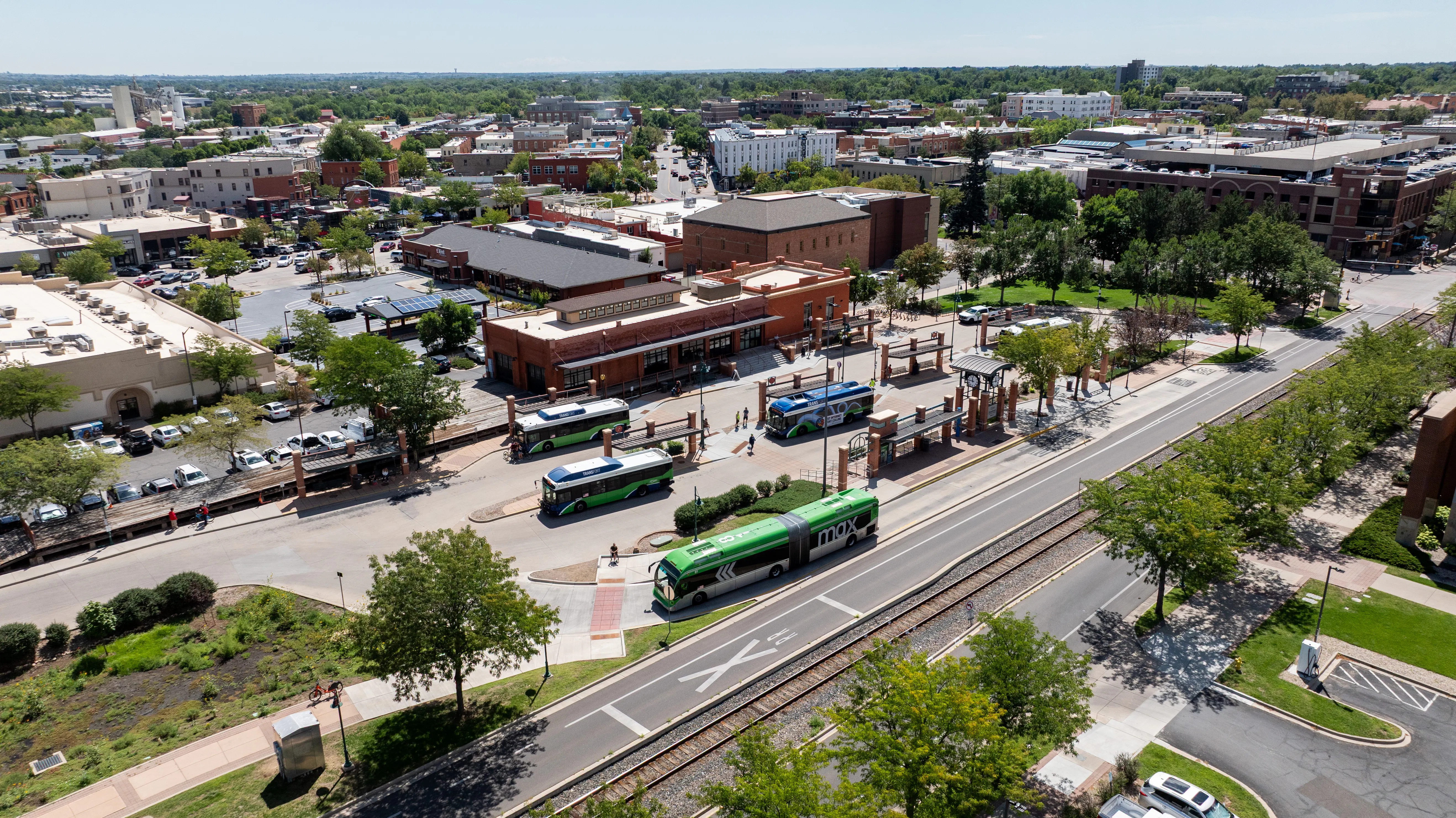
Transfort Optimization Plan
The Transfort Optimization Plan (Phase 1) was developed through community feedback, data analysis and transit industry best practices providing the community with more frequent service on key routes and a simpler, grid-based network. The changes were designed to improve frequency, reliability and connections while operating within available resources. Phase 1 changes were implemented on August 17, 2026.
The Dial-A-Ride service area changed to match the updated fixed-route bus system. Dial-A-Ride service hours are 6 a.m. - 9:30 p.m. Dial-A-Ride service no longer operates on Sundays. Dial-A-Taxi vouchers have a value of $15 each and the Dial-A-Taxi service area expanded toContinue reading
Submit a comment
I am disabled. I am not able to drive or walk at certain amount of distances. I rely on Route 6 for transportation and to help me get out of the house to get essentials and do needs. And I know there are a lot of people who feel the same way.
Route 6 helps tremendously to get to the other side of town from Taft. It is the only way for us to get to Swallow Station to get the Max or Route 5. Route 6 is essential and needs to continue. Many people use it.
Me and my family live off Taft and Elizabeth and use bus 6 very often. And so do lots and lots of others. We depend on bus 6 to get us to stores, appointments, and the max and swallow station to transfer to bus 5. We don't have a vehicle, we depend on the bus to get where we need to go. Please don't take away bus route 6!!! Its a lifeline for us and many others!!
30 minute service should be the goal even on the lowest frequency routes (7, 18, 16, etc.)- rearranging schedules for buses that run every hour isn't reasonable for many people. The city should also continue to explore the 'micro transit' option presented in one of the previous plans, even if this service is not free but still more economical that Lyft/Uber. Overall this is a good plan, but it is still disappointing that some routes will still run hour-long schedules.
I live near the west end of Horsetooth. The lack of good bus stops was already bad but the new changes would make it so I can never consider taking the bus. The nearest stops would be multiple blocks away and take ~30 minutes of walk time to get to.
I can appreciate some of the goals of this project. But it seems like there are way fewer ways for students to get to CSU, which affects not just our family, but I'm guessing many other people around town. Perhaps I'm reading the map wrong, but this feels completely disappointing and like a major oversight, since CSU is such a major part of our community, in terms of both citizens and community engagement.
Glad to see the #5 is proposed to be on a 30 minute schedule rather than an hour schedule. That's the only bus near me, and the hour schedule is a bit of a deterrent. Wish there was a connection from Horsetooth to the Max going North, but keeping the people on the #6 route in service in more important.
Would love to see one of the w Elizabeth buses extended to make a connection to the max easy, this is a big gap in the system currently and seems like an easy fix.
If there was anyway the #2 route could swing south on Taft Hill from Prospect to Drake and then head back to Overland and continue existing route, it sure would help those of us SW of Prospect and Taft Hill. Thanks.
Please extend 18N south to trilby
I live on the west side of town by Overland Trail and one of the main reasons I don't take the bus despite decent service is that all the routes near me terminate at CSU instead of old town and it's just too much of a hassle to transfer just to go a few more blocks. Instead I usually choose to bike or drive if the weather is bad cause it's so much quicker.
Hello! I feel the best scenario for CSU students living to the south and west of campus is #3. The only issue I see though, is the timing. Once per hour is OK, but not ideal. However, if they run on the HALF HOUR, that would work best for the majority of classes, since they start ON the hour. Currently. my daughter had to stop taking the bus on route 7 when it was reduced to once per hour, on the hour. She would either be very early to class or late. Same thing for going home, waiting an hour for the bus had a negative impact on her schedule. This would make sense for most working shifts as well, since I would imagine the majority of jobs begin On the hour. Thank you!
Please do not take away Route 6. While living down Drake past Taft, I used the 6 as my only option while going to school, and now work. Having the 6 also gives me access to get groceries before walking home with the Drake and Taft bus stops.
I'm a resident that relies on Rt 6 to get to work. If your current as of 2026 bus route is implemented, it would negatively impact my ability to make a living.
I am disappointed that Route 6 has been discontinued. This will mean that my new residence near Taft Hill and Drake will be nearly a mile from any bus stop. Will there be any other public transportation options for me?
Please dont take bus six a way this bus is my lifeline getting to work
Hello. I am writing to Transfort today to voice my concerns regarding the Route 6. I understand that in the new “optimization plan”, it is going to be discontinued. I really hope that does not happen! My family and I use the beloved 6 to get to work, CSU and downtown. Please, reconsider this terrible idea. It will leave many people stranded and cold.. thank you.
I strongly oppose this change. I ride route 6 every single day either to class or to work. There is no other route northwest of Mulberry and this plan would force hundreds of people to pay out of pocket for parking. This area is already limited in transportation options, and is far away enough from campus to prevent bike usage in cases of extreme weather. I am of the closest people that rely on route 6, I cannot imagine how many people further away are absolutely dismayed at the idea of paying for parking every day, or biking nearly 2 miles in extreme conditions. Please reconsider the decision to remove route 6. You are forcing people to pay out of pocket in a town that prides itself on free public transport.
I need Route 6 to stay cause i take that route from home to work and i take the bus from work to home
To Fort Collins City Leadership and Transfort Decision Makers,
I am writing to express strong opposition to the proposed elimination of Transfort Route 6 as outlined in scenario 2 and 3. This is not a minor adjustment or a “service optimization.” Cutting Route 6 would be a direct and harmful blow to the residents who rely on public transportation to live, work, attend school, and access essential services.
Route 6 is not optional for many people — it is a lifeline. Eliminating it would disproportionately impact working-class residents, students, seniors, and individuals with disabilities. It would make Fort Collins less accessible, less equitable, and less livable. For a city that regularly promotes sustainability and community wellbeing, this proposal is deeply inconsistent with the values Fort Collins claims to represent.
If Route 6 is cut, many residents will lose reliable access to jobs, grocery stores, medical appointments, and education. Not everyone has the privilege of owning a car or affording rising fuel, insurance, and maintenance costs. For those residents, removing a bus route is not an inconvenience — it is a real barrier that can cost someone their job, their health, or their stability.
It is also frustrating that this proposal is being discussed at a time when Fort Collins continues to grow. A growing city needs better transit, not less. Cutting a route because ridership may not meet a target ignores a basic reality: ridership is directly tied to frequency, reliability, and whether routes are preserved long enough for people to depend on them. Transit cannot be treated like a business that must “turn a profit” to justify existing. It is public infrastructure — just like roads, sidewalks, and snow removal — and it should be funded and protected accordingly.
If the city is facing a budget issue, then leadership should be transparent and honest about it. Do not solve financial challenges by cutting services that primarily affect residents with the least power and the fewest options. Fort Collins should be investing in transit, improving route efficiency, and strengthening connectivity — not removing a key route and expecting people to “figure it out.”
I urge you to reject any proposal to eliminate Route 6. At minimum, if changes must occur, there must be a clear replacement plan that provides equal or better access, with similar frequency, similar coverage, and minimal disruption to the people who rely on it most.
This decision will send a message about what kind of city Fort Collins intends to be. If Route 6 is cut, the message will be clear: the city is willing to abandon the residents who need public transit the most.
I strongly urge you to keep Route 6 in service by implementing scenario 1 outlined in your plan.
Please, please, please don’t take away our Route 9! Though ridership may be less than on other routes, the value and need of this route is great! Have you considered running a smaller bus, maybe 3 times a day - morning, noon, and late afternoon? That alone would side-step abandoning the needs of our neighborhoods. We ALL matter.
-
 Final Optimization Plan.pdf (24.3 MB) (pdf)
-
City Council Work Session Presentation - March 24 2026.pdf (713 KB) (pdf)
-
City Council Work Session Agenda Item Summary - March 24 2026.pdf (721 KB) (pdf)
-
Transfort Optimization Plan - Scenario Development Details.pdf (2.36 MB) (pdf)
-
Presentation to City Council - Oct. 28 2025.pdf (2.84 MB) (pdf)

Thank you for your contribution!
Help us reach out to more people in the community
Share this with family and friends