
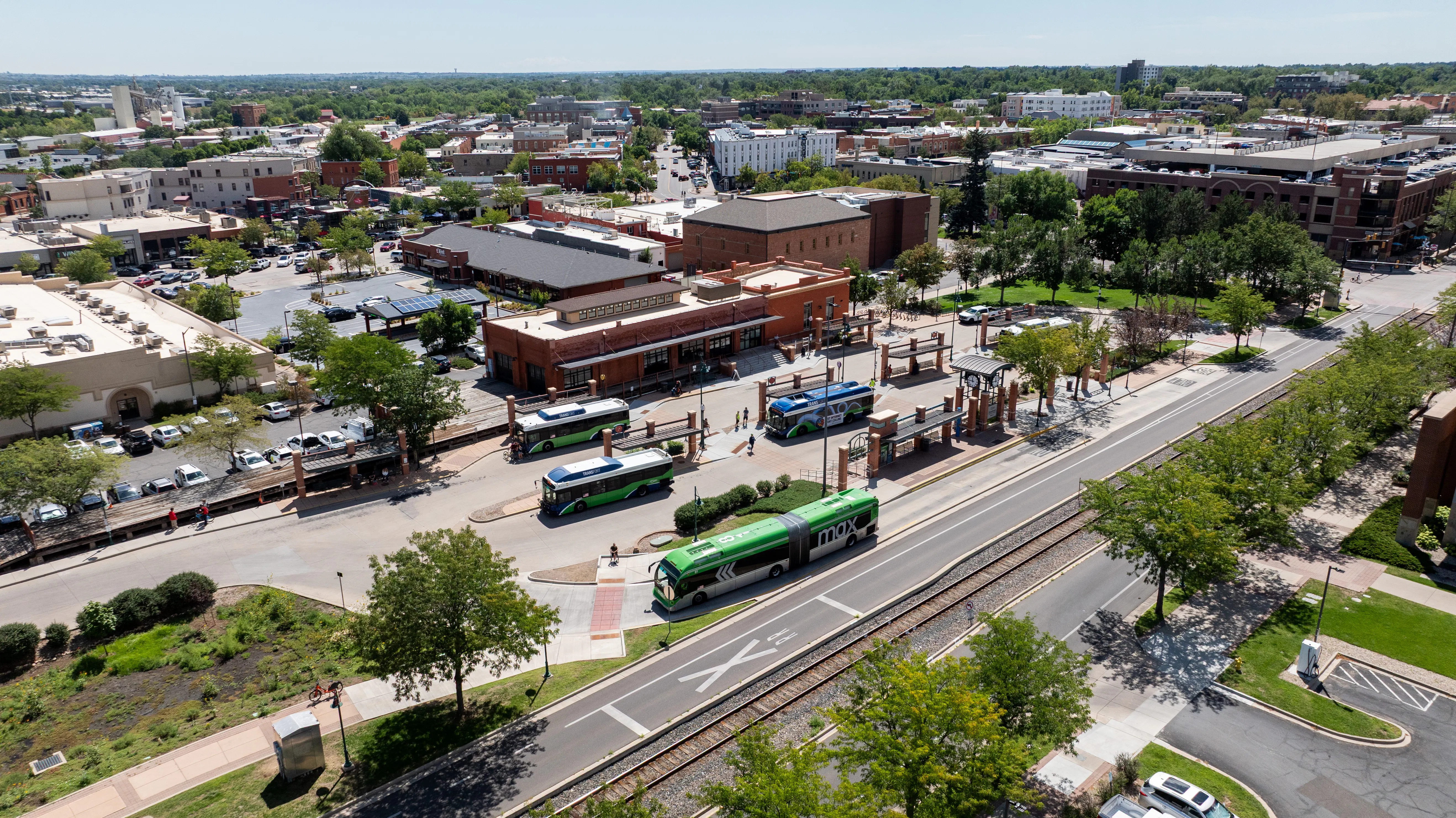
Transfort Optimization Plan
The Transfort Optimization Plan (Phase 1) was developed through community feedback, data analysis and transit industry best practices providing the community with more frequent service on key routes and a simpler, grid-based network. The changes were designed to improve frequency, reliability and connections while operating within available resources. Phase 1 changes were implemented on August 17, 2026.
The Dial-A-Ride service area changed to match the updated fixed-route bus system. Dial-A-Ride service hours are 6 a.m. - 9:30 p.m. Dial-A-Ride service no longer operates on Sundays. Dial-A-Taxi vouchers have a value of $15 each and the Dial-A-Taxi service area expanded toContinue reading
Submit a comment
I frequently use Route 32, both to access CSU and downtown. I object to any change to 32 route. I purchased a home in this West Prospect area with consideration of that bus route. Also 32 is Transforts’ most successful route, well used by many people to access CSU, grocery stores, and other locations. It makes no logical sense to change it.
What is needed is a bus that runs a circle route out of the CSU Transit station to downtown and back to the CSU, so that students and residents of the area served by route 32 can access those businesses.
The entire plan would benefit by being less dependent on the Max. It was probably a good idea in the early development of the system, but is not as useful now. A savings to the system would be to reduce the frequency of the Max route and to increase security on the Max.
This is going from bad to worse. No buses along Taft Hill so cutting off access to the business at drake and Taft!! I am partially blind and depend on the 6 to travel to locations along that route that i regularly attend. This new recommendation is not optimal. If you need to generate revenue then you will have to start charging again. RTD does and the buses are very busy
I’m writing to ask whether there is any possibility that Route 6 might continue to operate as part of the optimization plan.
During the day and into the early evening, I regularly observe strong ridership at stops along this route, particularly during business hours and when CSU is in session. While ridership does taper off after business hours, Route 6 appears to serve a significant number of passengers during much of the day. I’m concerned about the impact on those riders if service is discontinued.
In the interest of full disclosure, I live along this route and occasionally use the service myself, as does my wife for her commute from work. That said, my concern extends beyond personal use to the many passengers who rely on this route for daily transportation.
Thank you for considering this question, and I appreciate any insight you can share.
Please do not leave the Northwest corner of Fort Collins without service. You have many apartments and a high school that would be left without basic transportation creating a void for this area of town. Cutting the #6 & #9 completely leaves those of us without cars, stranded. City Park would no longer have service and there would be no way to connect to the Max. You have several low-income apartments in the area and those are the people who rely on public transit the most.
Hi, thanks to the city for constantly working to improve our public transit. However, I'm concerned that the recommended map largely abandons NW Fort Collins. Prior to October, there was a fairly robust bus network in this area, between the 9 and 10 routes, and route 6 on Mulberry. In the recommended map, that is seemingly all gone and the nearest routes are down at Elizabeth, which is pretty far south. Even maintaining one of these routes at their historical intervals (1-hour) would go a long way to preventing NW Fort Collins from becoming a transit-desert.
Removed by moderator.
Removed by moderator.
Removed by moderator.
Removed by moderator.
Are the buses replaced with new ones?
Work within your budget. Quit coming up with new plans that cost more than you have.
Please look at the InterCity busses in Olympia/Lacy Washington. Their population is less than Fort Collins, but they have a very good bus system.
-
 Final Optimization Plan.pdf (24.3 MB) (pdf)
-
City Council Work Session Presentation - March 24 2026.pdf (713 KB) (pdf)
-
City Council Work Session Agenda Item Summary - March 24 2026.pdf (721 KB) (pdf)
-
Transfort Optimization Plan - Scenario Development Details.pdf (2.36 MB) (pdf)
-
Presentation to City Council - Oct. 28 2025.pdf (2.84 MB) (pdf)

Thank you for your contribution!
Help us reach out to more people in the community
Share this with family and friends